
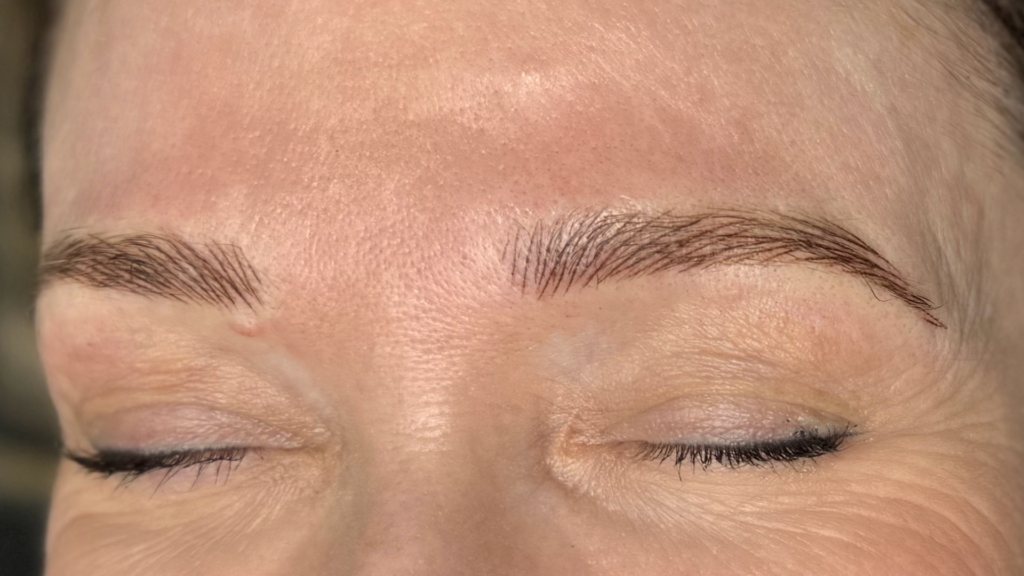
If you’re researching cosmetic eyebrow tattoo options, then you’ve more than likely come across a billion different words that all look to produce near enough the same result (confusing, right?)
As a client, it can be so overwhelming to be presented with what feels like a million options, not knowing which option might be the right one for you.
In this guide, we’ll focus on all things hairstroke brows, breaking down the difference between microblading and machine hairstrokes, how they work, and what you may want to consider before choosing between them.
What Is Microblading?
Microblading is a manual technique. Microblading consists of a hand held tool, which holds a blade made up of a row of needles. This tool is used to manually carve hair-like strokes throughout the brow, forming a shallow cut which the pigment then heals into.
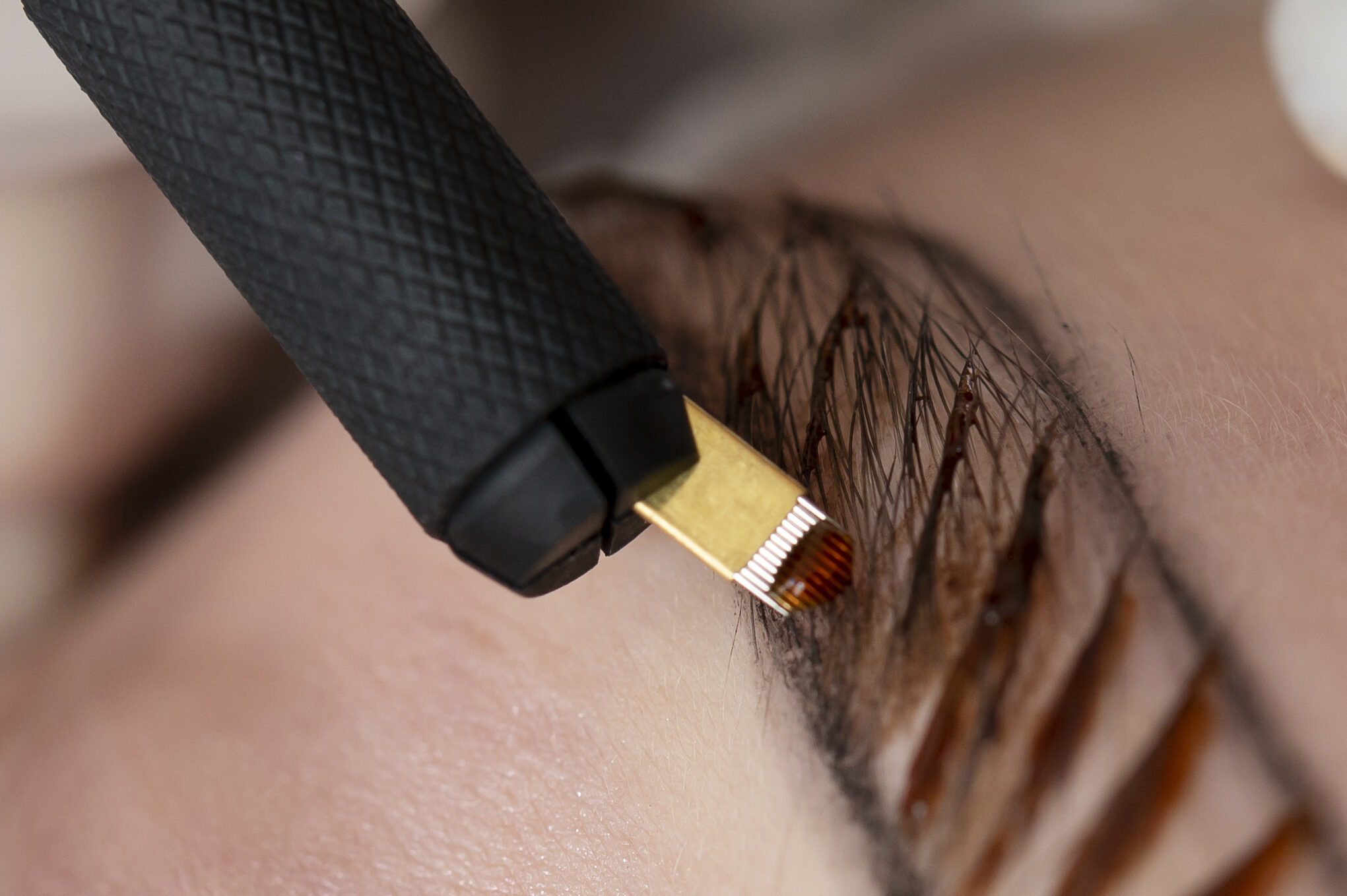
What are the benefits of microblading?
On the correct skin types, microblading can create crisp and natural hairstrokes, blending with the natural hair to create a subtle enhancement.
What are the considerations for microblading?
Microblading is a very skin type dependant service. Because a blade has less control as to how much pigment is being implanted into the skin and because it is reliant on the pigment being retained within that cut for the early stages of the healing process, oilier skins may push the pigment out or blur the pigment in the skin, leading to a blurred or faded result. Dry skin types retain the pigment much better, and they stay crisp for longer.
Whilst microblading can be a beautiful option for permanent makeup, frequent touch ups and repeated treatments can inevitably lead to scar tissue and compromise the skins health.
For this reason, microblading is not always recommended for:
- Oily skin types
- Thinner or more fragile skin that has a higher chance of scarring (such as those with EDS/diabetes)
- Mature skin
Personally I have chosen to not offer microblading as a service, and instead choose to work with machine only.
What Are Machine Hairstrokes?
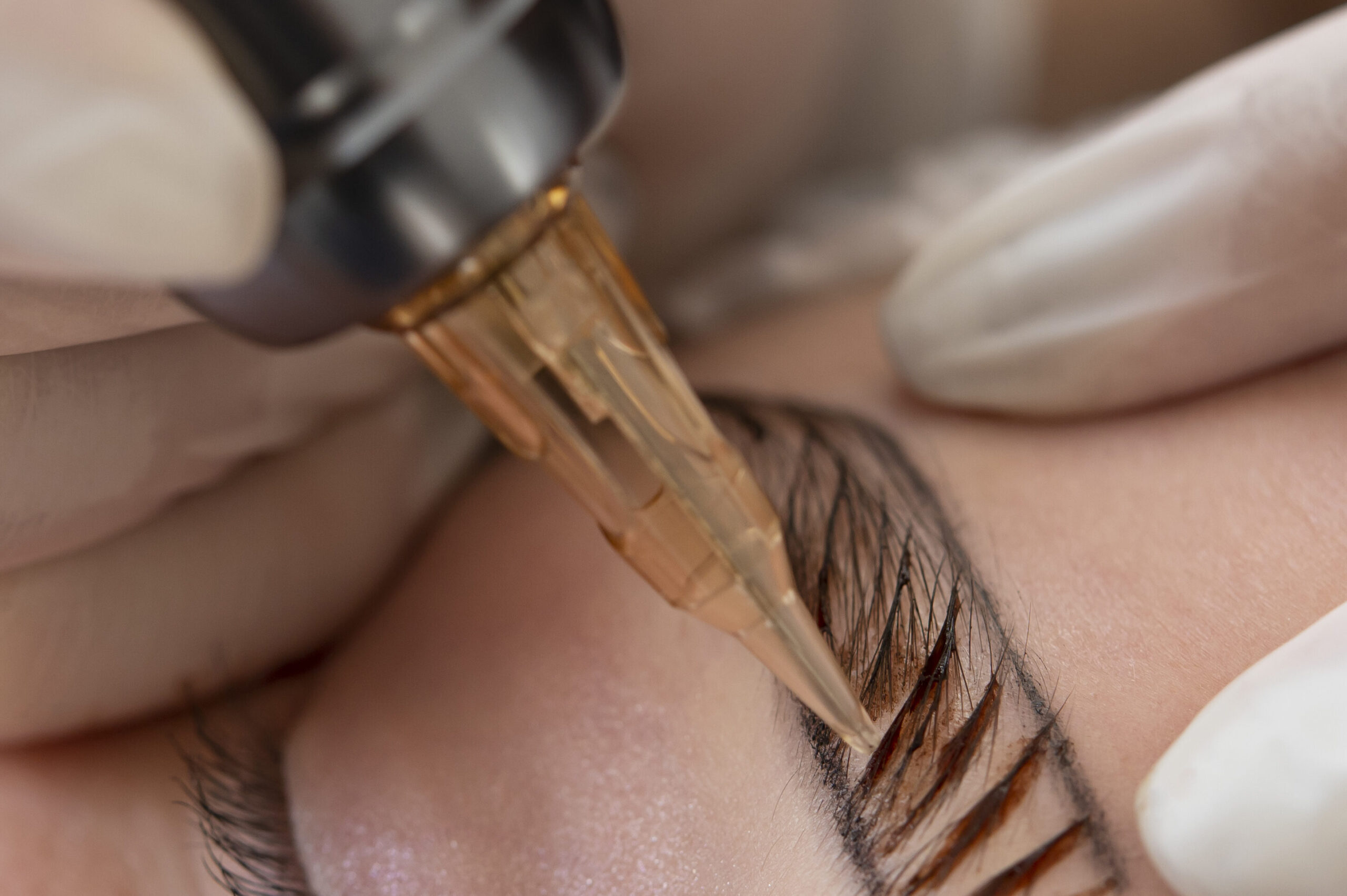
Machine hairstrokes (also known as nano brows or hyper realism brows) uses a machine technique to implant the pigment instead.
A machine has a needle cartridge, which works almost like a sewing machine motion. The needle cartridge is driven back and forth, creating a vacuum to which pigment travels down to the tip of the needle and deposited into the skin through lots of little micro-punctures.
When seeing a ‘hairstroke’ created by machine, it is actually composed of hundreds of little dots, or as we like to call them ‘pixels’. This technique allows for precise, consistent strokes and can be tailored to various skin types. I also love it because it means hairstrokes can overlap each other, density can be focused more in certain areas to create dimension as well as beautifully soft, fluffy tapers. The machine method is a lot less traumatic to the skin, suiting a much wider range of skin types.
What are the considerations for machine hairstrokes?
Machine hairstrokes take longer to create than microblading, ranging from 3-4 hours depending on the complexity of the brow and the artist.
While suitable for most skin types, very oily skin still may still be better suited to an ombre style.
Key Differences At A Glance
Technique
Microblading uses a manual blade, whereas machine hairstrokes are created using a digital device.
Skin Depth & Trauma
Microblading is more dependent on manual pressure and can cause more trauma over time. Machine work allows for controlled depth and a gentler approach to the skin.
Suitability
Microblading is best suited to dry or normal skin types. Machine hairstrokes are suitable for most skin types, however for very oily skins an ombre brow would be best suited.
Healed Results
Microblading may heal softer and can blur over time. Machine hairstrokes tend to heal more defined with a softer tapered finish and break down gradually over time.
Does One Last Longer Than The Other?
In short, no! The longevity of your permanent makeup is not determined solely by the technique used. Instead, it depends on several key factors:
Depth
Pigment should be implanted into the upper dermal layer of the skin, the ‘sweet spot’ for cosmetic tattooing. If it’s too superficial, the pigment will vanish during the 4-6 week healing period. If it’s implanted too deep, it may heal darker/to an undesirable colour or not fade as intended.
Pigment Type
Different pigments behave differently in the skin. For hairstrokes, pigments with low or no carbon content are often preferred, as they are less likely to blur and tend to fade better over time. For hairstrokes, we want a pigment to break down gradually to ensure you can have them touched up for better long-term results.
Saturation
How much pigment is implanted can affect both the healed result and how the treatment fades.
Individual Factors
Skin type, lifestyle, and how your body metabolises pigment all play a role in retention.
Which One is Right for You?
Ultimately, both microblading and machine hairstrokes are forms of cosmetic tattooing, and both can create beautiful results when performed correctly.
The most important factors are not just the technique itself, but:
- The suitability for your skin
- The approach taken by your artist
- Your individual brow goals
For many clients, machine hairstrokes offer a more controlled and versatile option, particularly for long-term skin health.
A consultation is always the best place to start. This allows your artist to assess your skin, discuss your goals, and recommend the most appropriate treatment option for you!